
2026 | ١٤٤٨
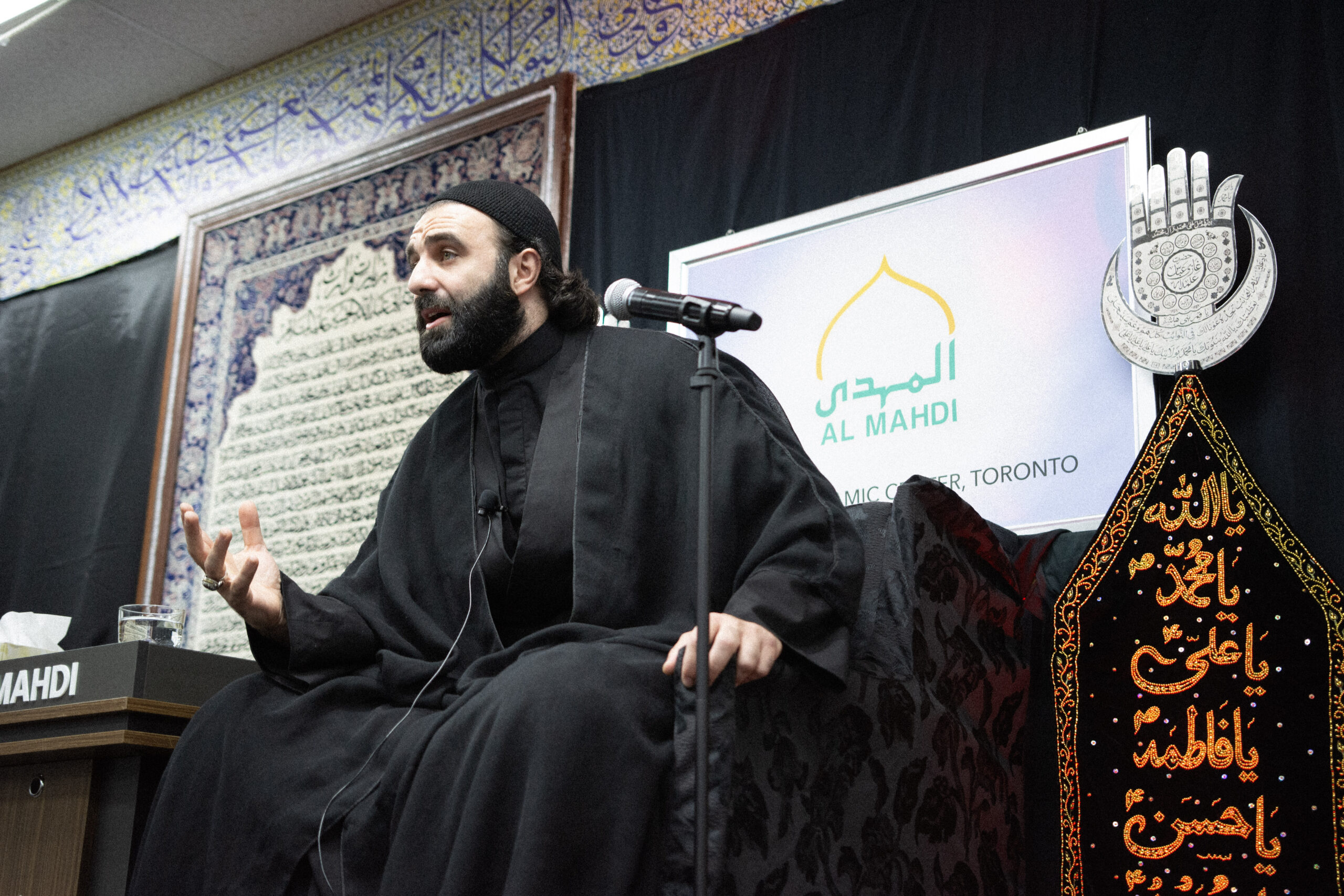
11 Nights with Sayyid Hussain Makke
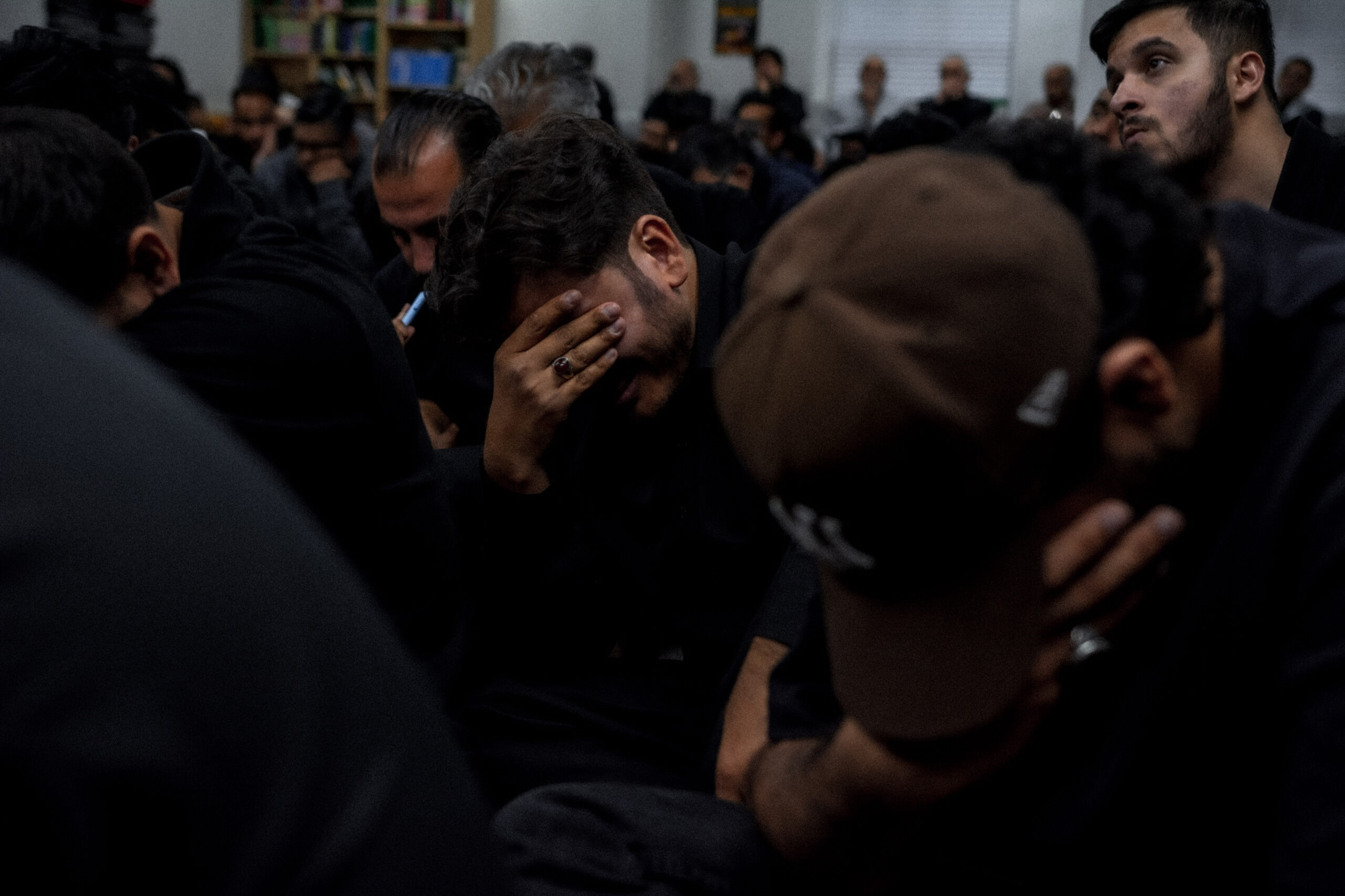
There was a moment early in Sayyid’s Muharram lectures where he asked the room a simple, unsettling question: what would your life look like if you had never known Imam Hussain (AS)? Not admired him from a distance, not heard his name in passing, but actually knew him. It’s the kind of question that set the tone for everything that followed, this wasn’t a series about a battle that happened fourteen centuries ago. It was a series about how we’re supposed to live right now.
That was the thread holding these nights together, Sayyid Makke circled all of his speeches back to one core conviction: Islam was never meant to live only in books. You can study it, debate it, footnote it, but at some point, if it’s real, it has to be worn. It has to show up in a person. And for the Shia tradition, that person is the Imam: not a scholar, not a political figure, but a living, breathing embodiment of what the religion actually asks of us. The lectures opened at the very beginning of the story, Prophet Adam’s creation, the angels’ perplexity that Allah (SWT) would make a creature capable of disobeying Him, and Allah’s quiet answer: I know what you don’t know. Free will, as it turned out, wasn’t a design flaw, it was the whole point. Without the ability to choose wrongly, there could be no one who chooses rightly, meaning no Imam Hussain (AS), no Karbala, none of it.
From there, the series built a striking interpretive method. Sayyid suggested that if you want to understand what the Imam was really doing at any given moment, you have to read his life the way scholars read the Qur’an, by separating the clear, foundational principles from the vague situational details, and letting the former explain the latter. It sounds academic on paper, but in practice it becomes the engine for everything else he said: every decision Imam Hussain (AS) made in the lead-up to Karbala, he argued, was intentional, purposeful, and never just personal. When the Imam refused to pledge allegiance to Yazid, when he left Medina, when he kept walking towards Kufa even after being warned he’ll be killed, none of it, in this reading, is impulsive or merely political. It’s a message, delivered on purpose, to everyone who would ever come after him.
One of the more quietly devastating threads running through the lectures was the tension between this world, and the next. Sayyid kept returning to a single line from Imam Hussain’s (AS) final letter to his brother: “It is as if this world never existed, and the next world never ceased to exist.” This is seen in the sermon in Mecca where the Imam laid out two conditions for anyone who wanted to join him (a willingness to give up everything, and a genuine readiness to meet our lord), and only around seventy people actually met those conditions, where in contrast between the calm, almost peaceful atmosphere in the Imam’s camp and the anxious infighting in the army of the enemy sent to stop him. The people who stayed weren’t the ones with nothing to lose. They were the ones who had decided, deliberately, what actually mattered.
Underneath all of it sits a theological backbone that Sayyid Makke doesn’t shy away from getting technical about, the transmission history of Shia hadith literature, a narration describing the future occultation of the twelfth Imam, and the idea, borrowed from the tradition, that to know Allah (SWT) is really to know the Imam of your own era. It’s a bold claim, and he knows it: to die without knowing your Imam, in this framework, is to die without ever having found your bearings at all. Which is why, by the end of the lectures, the killing of Imam Hussain (AS) wasn’t described as a political assassination or a tribal dispute. It was instead described as an attack on Allah’s (SWT) guidance as embodied in his divinely appointed representative. And so Karbala in turn, becomes something closer to a message that was always meant to outlive the moment it happened in: proof that dignity can outlast power, and a blueprint for anyone still trying to figure out what it means to actually live what they believe.
Striving to be worthy.
510 Third Concession Rd Pickering, ON L1X 2R5
my@cig.ca

Our Socials: