
2026 | ١٤٤٨
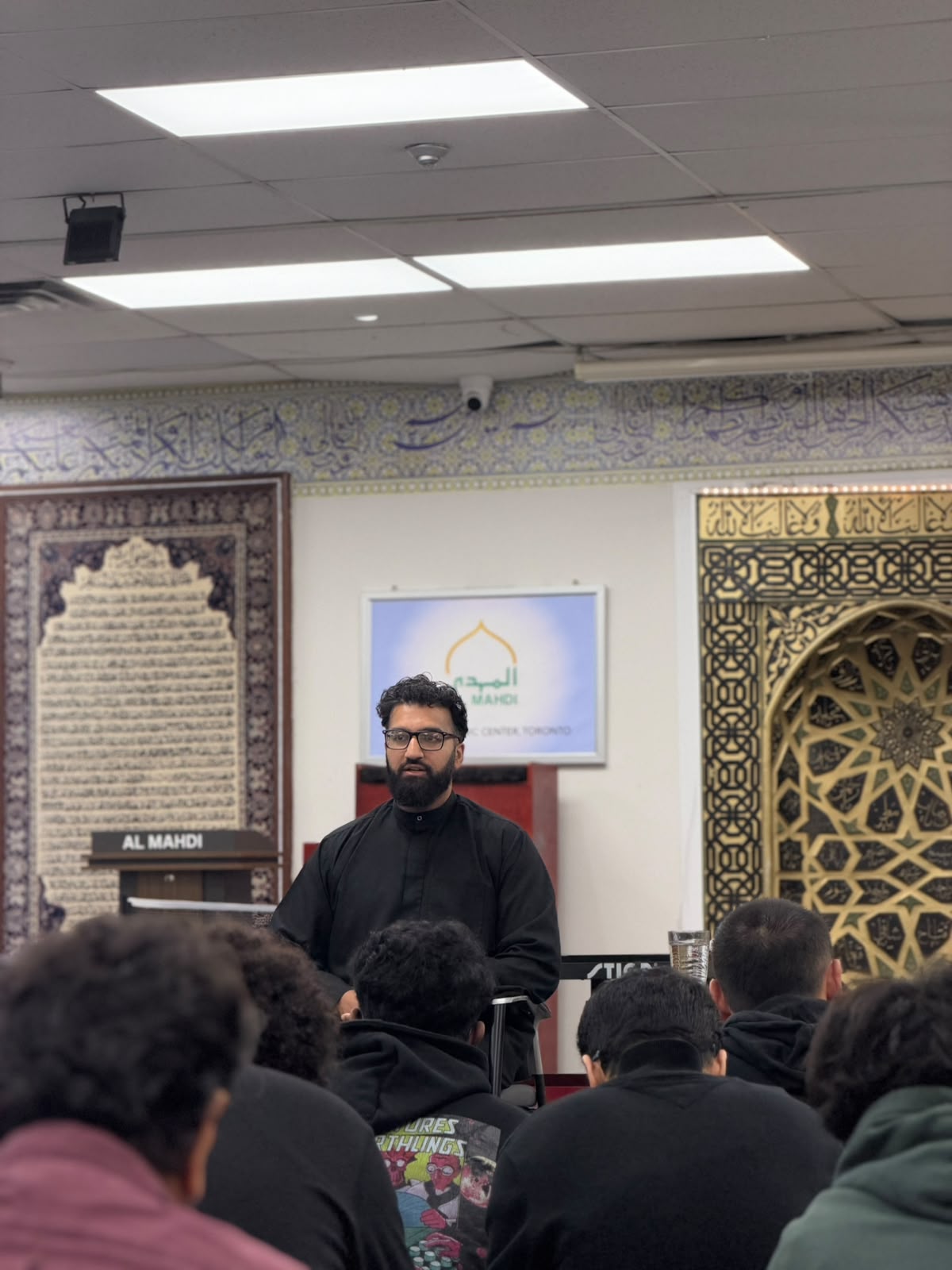
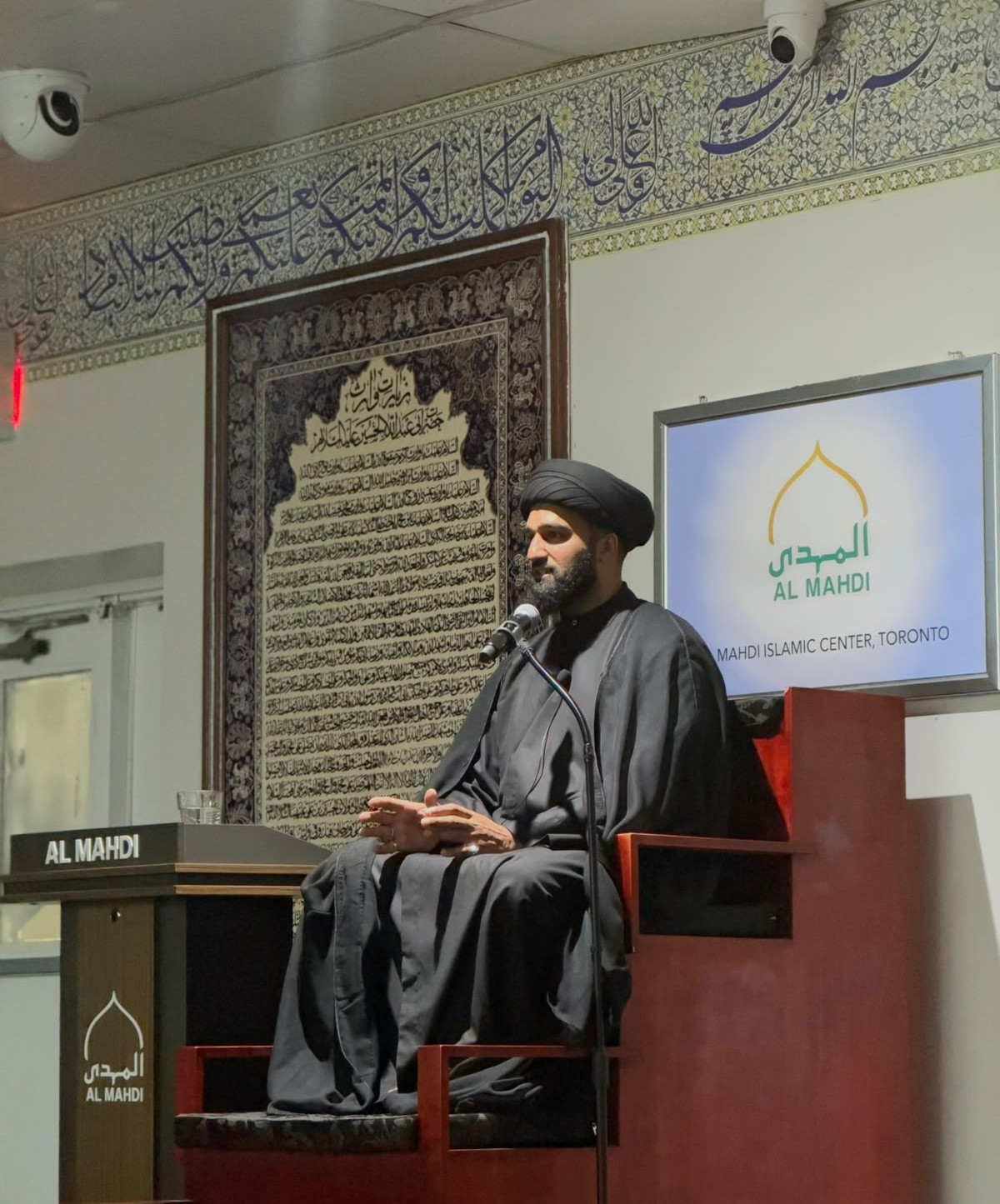
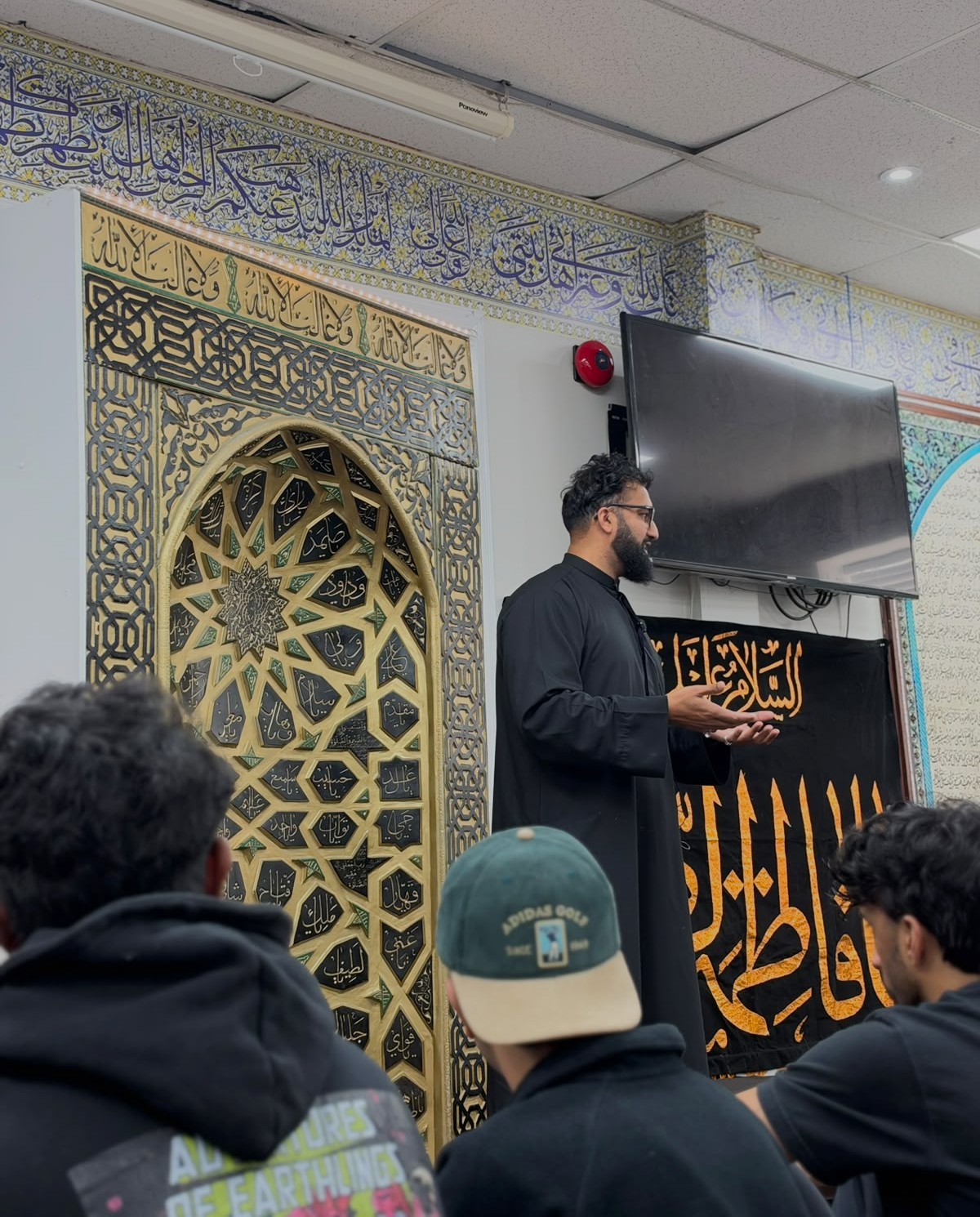
Some gatherings feel different the moment you walk in. That was the message Sayyid Kamber Hussain opened with on the first night of our Fatimiyya series: this isn’t an ordinary get-together. It’s a gathering in the name of the Ahlul Bayt, one that Imam al-Mahdi (A.S) loves, and a rare chance to sit at the door of the Prophet’s beloved daughter and ask for something. Many people will walk to Karbala for Imam Hussain, he noted, but far fewer come forward to proudly honor Lady Fatima (as). So we should be among those who do, not out of division, but because she belongs to everyone who loves the Prophet.
From there, he set out the arc of the three nights: how Allah’s sunan (divine processes) shape the world, and how to read events through that divine lens instead of only the material one. The anchor was the seventh verse from Surah Muhammad: “if you help Allah, He will help you and make your feet firm”. But Allah doesn’t need our help, so what does it mean? His answer was practical: helping Allah means helping His cause, and the cause lives in the believers around us. Before we claim closeness to the Imams, we have to look at how we treat our spouses, our parents, our children, and the brother stranded on the highway at midnight. The vertical relationship with the Ahlul Bayt is real, but it can’t skip the horizontal one. In his words, you can’t push 100 kilos if you haven’t done the 50. He pointed to serving through education, through a phone call, through showing up, and warned that hurting a believer is no small thing.
The second night turned to a question many of us quietly carry: if we’re on the path of truth, why do the trials keep coming? His answer was to stop being outcome-focused. Our job is to bring everything we have to the table, effort, skills, sincerity, and leave the result to Allah. Don’t wait until you’re perfect to start, he urged; if you fall, get back up, because Shaytan’s favorite whisper is “why bother going back?” He drew on the story of Talut and Jalut, a small, outmatched group tested and filtered along the way, and on Uhud, where setbacks came but the promise stood. He pointed to the steadfastness of the people of Lebanon, Iran, Iraq, and Yemen as living echoes of Karbala: they may not see the final victory, but they keep doing their part. And he offered a line worth remembering: don’t judge the whole book by the chapter you’re in right now.
On the third night, he moved to a harder subject: recognizing our enemies, but properly. Naming them and shouting isn’t enough, and neither is reacting to pure emotion. Lady Fatima and Imam Ali (as) were not passive, yet they acted with wisdom and patience because they were protecting Islam itself, not winning a moment. His examples were vivid. A provocateur who stages a confrontation for the cameras wants your outrage, so give him none. The Quranic formula of rejecting false authority and affirming Allah has to be held together, with no lopsided focus on either side. And “false deities” can be subtle, like the car, the brand, or the status that starts steering our behavior. He cautioned against the two extremes: those who identify every enemy but neglect their own prayer, and those who pray but never understand the world around them.
He then outlined how adversaries work: mixing truth with falsehood in the media, spreading corrosive ideas into our communities, and above all fueling division amongst one another. We split centers over ego, and we trust the outsider’s headline over our own brother’s word. His antidote was to assume the best of fellow believers, disagree without making it personal, trace problems to their roots rather than slapping on plasters, and keep our spiritual armor on. Salah, he said, is the steering wheel: without it, you can’t turn left or right when an obstacle appears. And act with knowledge, because someone traveling in the wrong direction only gets further from the goal the faster they go.
Woven through all three nights was the story of Lady Fatima (as) herself: the Prophet standing to greet her and kissing her hand, the 75 days after his passing, the door, her visits to the Ansar, her youth at just 18, and the unmarked grave that leaves us with nowhere to picture her. He closed with her final days, her wish to be shielded even in burial, Imam Hasan and Imam Hussain’s return to a mother who had left them, and the scene on the Day of Judgment when she asks Allah about her Hussain. The tears, he reminded us, are valuable. But they’re meant to carry us somewhere: to a stronger community, a wiser response, and a deeper connection with her and her Lord.
Striving to be worthy.
510 Third Concession Rd Pickering, ON L1X 2R5
my@cig.ca

Our Socials: